Insects are one of the biggest threats to the health and lifespan of urban trees. They don't just make trees look bad – destroy the foliage that produces the food for the tree, stop the flow of water and nutrients, reducing the tree's vitality and even causing it to die. In the Greater Toronto Area (GTA), homeowners often deal with destructive pests like Aphids, Box tree moth, Honeylocust bugs and Spongy Moth (formally known as Gypsy Moth or L.D.D.).
These insects can quickly strip trees of their leaves or kill them altogether. Acting early makes a big difference. With timely care and prevention, you can avoid costly tree removals and keep your yard beautiful and healthy. Next, you will see the simple steps to help your trees and shrubs stay strong.
Common Tree Insects in Toronto
The Greater Toronto Area (GTA) faces serious challenges from both native and invasive insects that attack local trees. Managing the population of these pests early is the best way to protect your trees and keep them healthy.
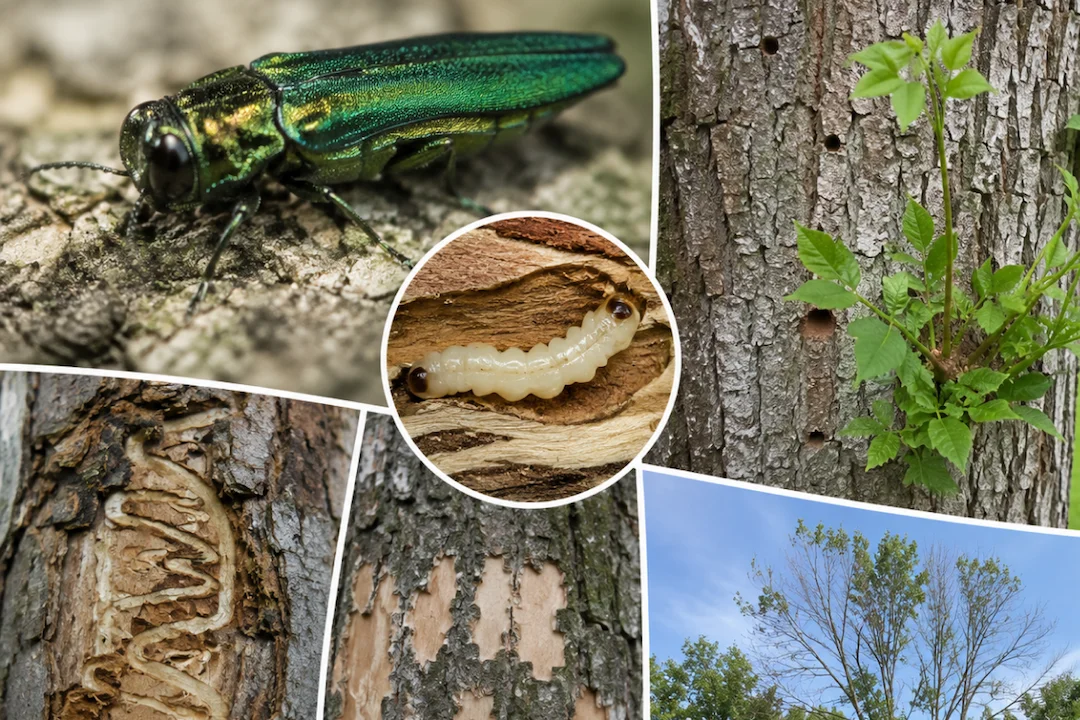
Emerald ash borer (EAB). The shiny green Emerald Ash Borer is a very destructive pest that attacks all Ash trees (does not include Mountain ash). Its larvae tunnel under the bark, killing the living Cambium layer. Look for ⅛ inch (3 mm.) D-shaped holes, winding tunnels under peeling bark, suckers and sprouts on the trunk, light coloured patches on the bark and thinning leaves at the top. If left untreated, the tree usually dies within a few years.
Spongy Moth. It has hairy caterpillars with grey to black bodies with five pairs of blue spots followed by six pairs or red spots along their backs. When the head of the caterpillar changes from black to yellow, they stop eating. In large outbreaks, they can strip a tree of leaves overnight, weakening it as it uses energy to grow new foliage. The main hosts are Oaks, Maples, Willows and Colorado Spruce trees.
Aphids. They are tiny green, brown or even clear, sucking insects that feed on young leaves and shoots. They make leaves curl, wilt, or grow poorly and leave sticky "honeydew" that can grow black sooty mold and block sunlight.
Honeylocust plant bugs are often confused with green aphids. These will devour the leaves of Honeylocust trees leaving decks, sidewalks and furniture covered in sticky honeydew. These little green bugs are very annoying as they fly about the tree when disturbed. This is the main reason Honeylocusts have so much deadwood.
Magnolia Scale insects. They look like bumps on the underside of branches. They resemble large dirty grey Q-Tips and do not move. They feed on sap, weakening the tree. Large infestations can cause yellow leaves, early leaf drop, and dead branches, and they are hard to control.
Birch leafminers are small sawflies (insects) that live between the upper and lower epidermis (skin) of the leaf and feed from the inside of the leaf starting in early spring leaving brown Birch leaves in July and August. Repeated infestations stress the Birch tree resulting in attracting the Birch Bronze Borer which kills the tree.
Box Tree moth is a relatively new pest in Southern Ontario. They have a voracious appetite and can eat all the leaves from Boxwood plants in a single day. People have complained that they can actually hear the insects eating their plants. There are up to four generations of Box Tree moths per year. If you have Boxwoods, you will likely have this insect.
Mites are not insects, they are small arachnids usually less than 1 mm. in length. They can cause cosmetic galls (deformations) on the leaves or destroy leaves and needles entirely. Common problem for Dwarf Alberta Spruce and hardwood trees.
Signs Your Tree May Have an Insect Problem
Catching pest damage early helps keep trees healthy and avoids costly removals. So, you should check your trees and shrubs often for these common warning signs:
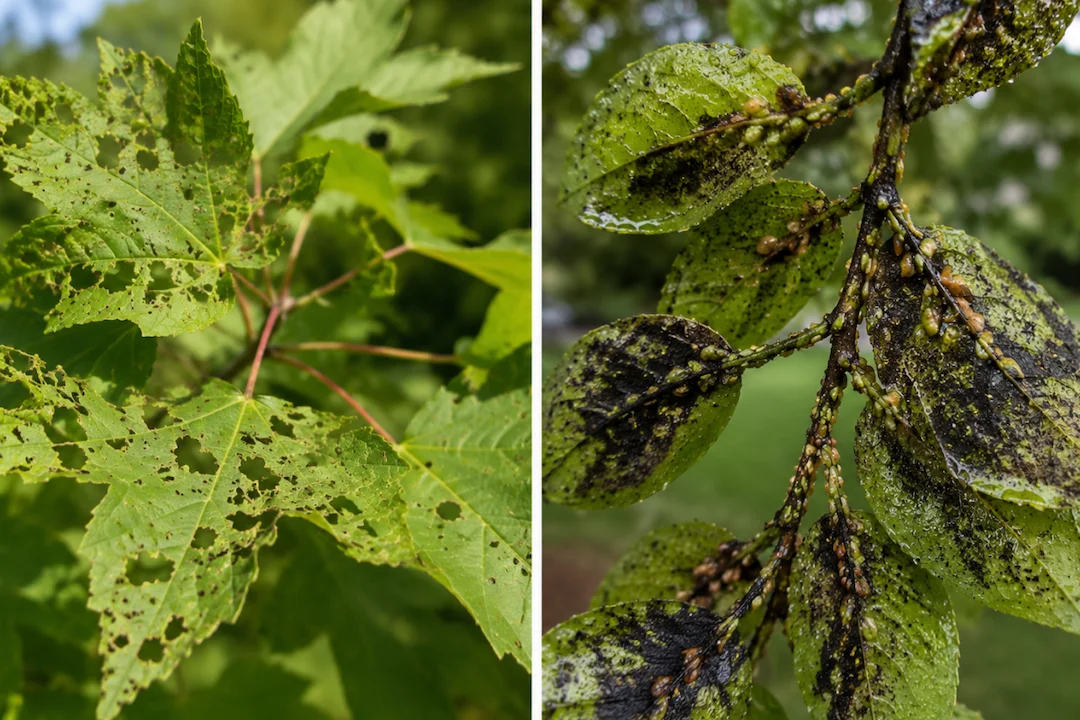
Chewed or Damaged Leaves
Holes, missing leaf parts, or skeletonized leaves usually mean caterpillars or beetles. Curled, distorted, or bare leaves, yellow or brown leaves, or sudden leaf drop, also signal pests.
Sticky Residue and Black Mold
Sticky leaves or ground mean "honeydew" from pests like aphids or scales. Over time, black sooty mold can grow, blocking sunlight and weakening the tree.
Holes in the Bark and Sawdust-Like Material
Small holes in the bark show wood-boring insects. D-shaped holes suggest Emerald Ash Borer; round holes in a horizontal line in Lindens may be Sapsucker birds and little concern. Sawdust-like frass around the holes is another sign.
Large black ants are Carpenter ants. They do not cause damage in trees, they are using damaged trees for housing. They clear the sawdust to make more room. They generally do not need to be removed as long as the tree is stable. A consultation with an Arborist would be recommended.
Stunted Growth or Dead Branch Tips
If your tree is growing slowly, has fewer leaves, or shows dying tips and branches during the growing season, it could be suffering from pest damage. Lots of small fast growing branches from the base of the tree or tree trunk indicate stress which could indicate insect infestation.
Prevention Methods
The best way to protect trees is to keep them healthy. Strong trees resist pests better, reducing the need for chemicals. For effective tree insect management you have to keep in mind the following points:
Water Deeply and Wisely
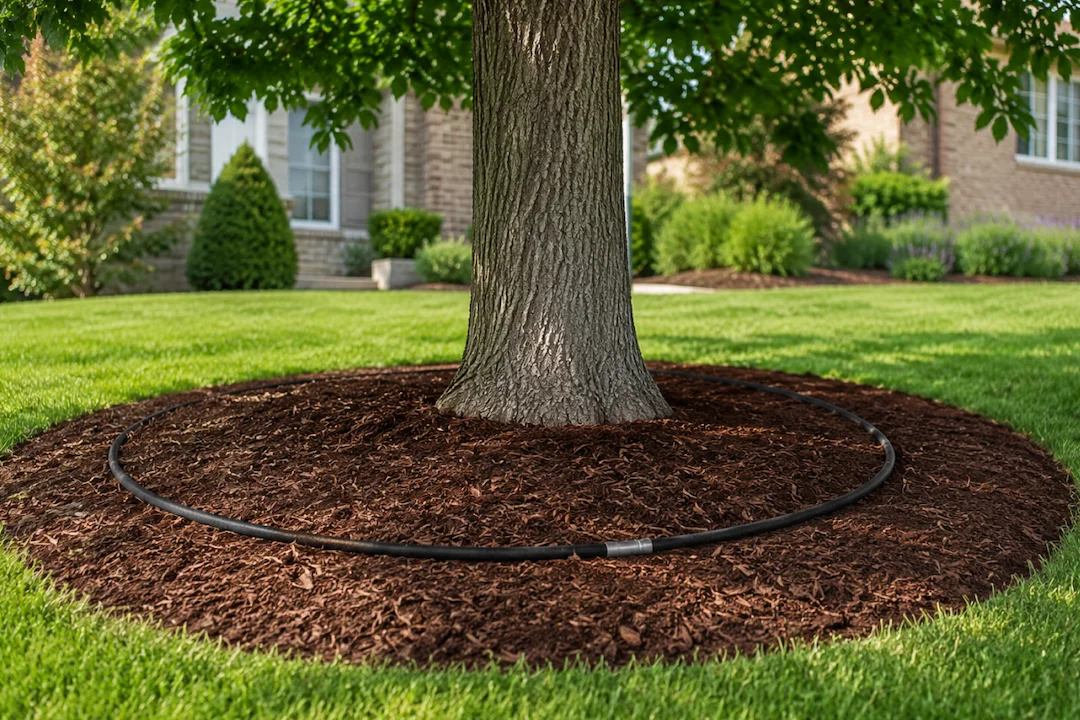
Give your trees deep, occasional watering instead of frequent, shallow watering. This helps roots grow deeper, longer and stronger. During dry periods, water slowly around the drip line – the outer edge of the canopy – so the soil can absorb the moisture. It takes time for the water to get down to the roots. A long slow drip (4-6 hours) early in the day is far better than a ten minute stream from a sprinkler or hose. The new style soaker hoses are inexpensive and perfect for this method of watering. Do this twice a week in dry hot weather. Deep roots make trees more resilient to drought and stress.
Avoid watering close to nighttime or getting the foliage wet to avoid fungus.
Mulch the Right Way
Spread 2–4 inches of wood chip mulch around the tree, keeping a few inches from the trunk. Mulch keeps soil moist, protects roots, and adds nutrients. Avoid mulch volcanos.
Feed the Soil, Not Just the Tree
Urban soils often lack key nutrients. Use a slow-release fertilizer only when needed, based on a soil test. You can also mix in compost or organic matter to improve soil structure and fertility. Healthy soil supports healthy roots – and healthy roots support pest-resistant trees.
Prune Regularly
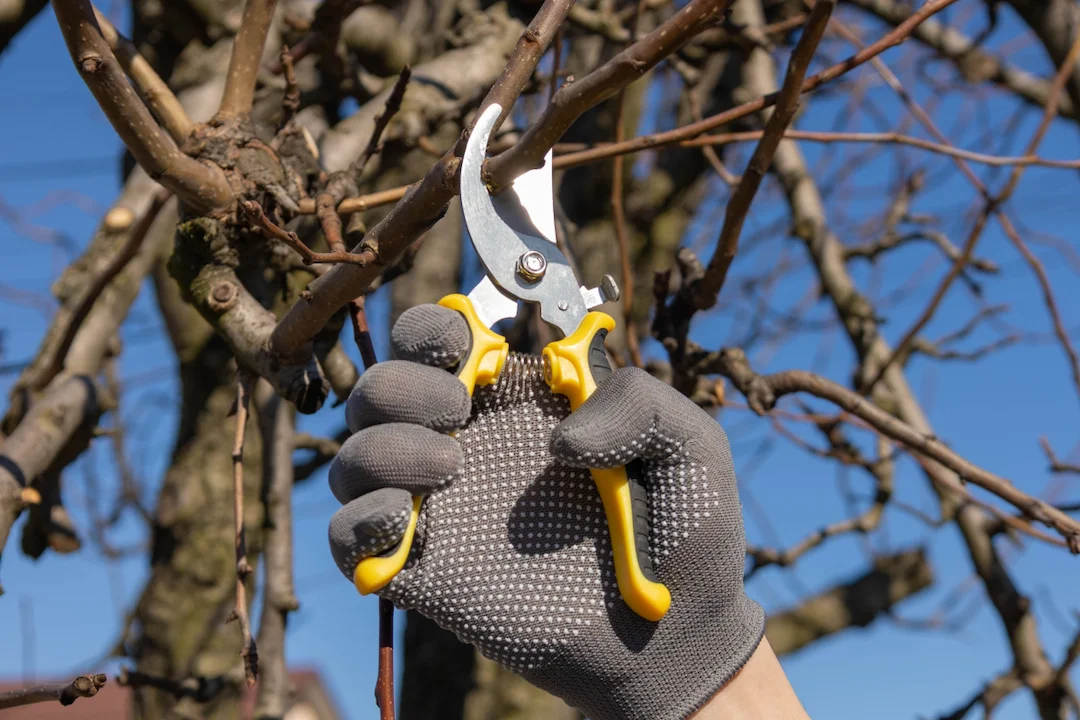
Trim away dead, damaged, or diseased branches as soon as you notice them. Pruning improves airflow and lets sunlight reach more of the canopy, reducing the chance of fungal growth. Always use clean, sharp tools to prevent spreading disease. Fungal diseases are spread by spores not pruning tools. You will transfer more spores with your clothes than your tools. Vascular diseases like Fireblight can be spread by tools in the growing season if not disinfected between cuts. Learn where and how to make proper pruning cuts or better still, hire an Arborist with the correct skills, tools and knowledge.
Check Your Trees Often
Take a few minutes each month to inspect your trees. Look closely at the trunk, branches, and leaves – especially the undersides – for signs of damage or pests. Catching a problem early often means a quick, inexpensive fix instead of a major treatment or removal.
Invite Helpful Insects
Attract beneficial insects like ladybugs, Praying Mantis and lacewings to control pests naturally. Plant flowers like dill, fennel, yarrow, or sweet alyssum, and avoid broad-use pesticides.
Insecticidal Soap Spray
Insecticidal soap controls soft insects like aphids, mites, and scales by drying them out. Mix 1 tsp mild soap in a gallon of water and spray on pests every few days. Do not use dish detergent.
Horticultural Oils
Horticultural oils are made from light mineral or vegetable oils and kill pests by smothering their eggs, larvae, or adults. Use a dormant oil (the same as Horticultural Oil) spray in early spring before buds open to control overwintering insects, or a lighter summer version for active infestations. Always follow the instructions on the product label for best results.
Do not use Horticultural oil mixed with Lime Sulphur without pretesting it on a small expendable branch to see if there is a phytotoxic reaction.
Companion Planting
Plants can protect trees too. Herbs like chives or garlic repel pests, while flowers like dill, fennel, and yarrow attract beneficial insects that eat tree pests.
When to Use Professional Treatment
While natural and homemade solutions are excellent for minor issues, certain situations demand the expertise and specialized equipment of a Certified Arborist. Professional help is not just about chemical application; it's about accurate diagnosis and targeted management plans.
Severe infestations or dangerous pests. If you have a serious issue like the Emerald Ash Borer (EAB), you need professional help.
Need for systemic treatment. Trunk injection is a highly effective way to treat pests like EAB, Spongy moth and some scale bugs. It delivers systemic insecticides directly into the tree's vascular system, protecting the tree from within while reducing environmental impact.
Diagnosis and high-value trees. If the signs are unclear or the tree is valuable – such as a mature shade tree, heritage tree, or key landscape feature – a Certified Arborist can give an accurate diagnosis and suggest the safest, most effective tree bug treatment.
Large or difficult-to-reach trees. Treating the entire canopy of a large tree requires specialized high-pressure sprayers that homeowners don't possess.
Before you spray any tree or shrub, READ THE LABEL. Not all products are safe or registered in Canada for homeowner use. The label is the law.
In the GTA, trusted tree care services like Tree Doctors are equipped to assess the health of your tree and provide long-term, custom Plant Health Care (PHC) programs, saving your tree and protecting your investment.
Protecting Trees Year-Round
There is no doubt that you have to take care of your trees. But this is not a hobby. This is rather a job targeted for each season. With a few small changes throughout the year, you can keep your trees strong, healthy, and free from pests. These are the main steps how to do it:
| Season | Focus | What to Do |
| Spring | Prevention |
Apply dormant oil before buds open to stop overwintering pests. Check for early signs of aphids or caterpillars and treat them right away with a natural spray. |
| Summer | Monitoring |
Watch your trees during hot months. Look for sticky spots, holes, or discolored leaves. Water deeply once or twice a week to keep trees healthy and resilient. |
| Fall | Preparation |
Clean up fallen leaves and branches that may hide pests. Add a layer of mulch around the base and water well before the ground freezes. |
| Winter | Checking |
On mild days, inspect trees for egg clusters, especially from Spongy Moths, and remove them carefully. Winter is also the best time to prune most large branches while the tree is dormant. Oak trees should be pruned in the winter. |
Tree Doctors – Your Partner in Tree Protection
When pests threaten your trees, trust Tree Doctors – your local Toronto and GTA specialists. Our arborists bring over 50 years of combined experience in diagnosing and treating tree health issues. We use safe, eco-friendly pest control methods and targeted treatments like systemic tree injections for serious pests such as the Emerald Ash Borer. We are fully insured and locally based, is dedicated to keeping your landscape healthy, beautiful, and protected – all with professional care you can rely on.