If you live in Toronto or the Greater Toronto Area, chances are you've looked over your fence and wondered: is that tree a problem? Whether branches are scraping your roof, roots are lifting your driveway, or you're worried a diseased trunk might fall on your car—disputes over neighbouring trees are among the most common property conflicts in the GTA.
This guide explains exactly what your rights are under Ontario and Toronto law, who is liable when a neighbour's tree causes damage, and the practical steps to resolve the issue—without destroying your neighbourly relationship or landing in court.
Your Legal Rights: What Ontario Law Says About Overhanging Trees
Under Ontario common law and the Ontario Forestry Act, you have the right to trim branches and roots that cross your property line—but only up to the boundary. You cannot:
- Step onto your neighbour's property without written permission
- Harm, kill, or significantly damage the tree
- Remove a tree that is rooted on their property
In Toronto specifically, the Private Tree Bylaw (Chapter 813 of the Toronto Municipal Code) adds an important layer: any tree with a trunk diameter of 30 cm (about 12 inches) or more at breast height is protected. Removing or significantly pruning a protected tree—even one that overhangs your yard—may require a permit from the City.
If the tree straddles the property line (a "boundary tree" under Ontario law), both neighbours are co-owners. Neither party can remove or severely prune the tree without the other's consent.
Who Is Responsible When a Neighbour's Tree Damages Your Property?
This is the question most homeowners in Toronto ask, and the answer depends on one key factor: negligence.
|
Situation |
Who is likely responsible? |
|
Healthy tree falls during a storm ("Act of God") |
Your own home insurance typically covers your property damage |
|
Diseased or dead tree your neighbour ignored |
Neighbour may be liable if negligence can be proven |
|
You warned your neighbour in writing and they did nothing |
Strong evidence of neighbour's negligence — document everything |
|
City-owned tree on a boulevard or road allowance |
Contact 311 — the City of Toronto is responsible |
Key takeaway: if you can show the tree owner knew (or should have known) their tree was hazardous and did nothing, they can be held liable for resulting damage. This is why documentation is so important.
Step-by-Step: What to Do If a Neighbour's Tree Is Threatening Your Property
Step 1 — Document the Problem
Before doing anything else, create a record. Take timestamped photos and videos from multiple angles. Note the date, weather conditions, and what specific damage or risk you can see. If branches have already fallen, photograph both the fallen debris and the source on the tree. This record will matter enormously if you eventually need to file an insurance claim or pursue legal action.
Step 2 — Talk to Your Neighbour
In most cases, a calm, direct conversation is the fastest solution. Your neighbour may not realize their tree is a hazard. Explain the specific risks—for example, a heavy branch hanging over your roof or roots visibly lifting your driveway—and suggest calling a certified arborist together to get an objective assessment. Many neighbours are willing to share the cost of trimming when they understand the risk.
Step 3 — Hire an ISA-Certified Arborist
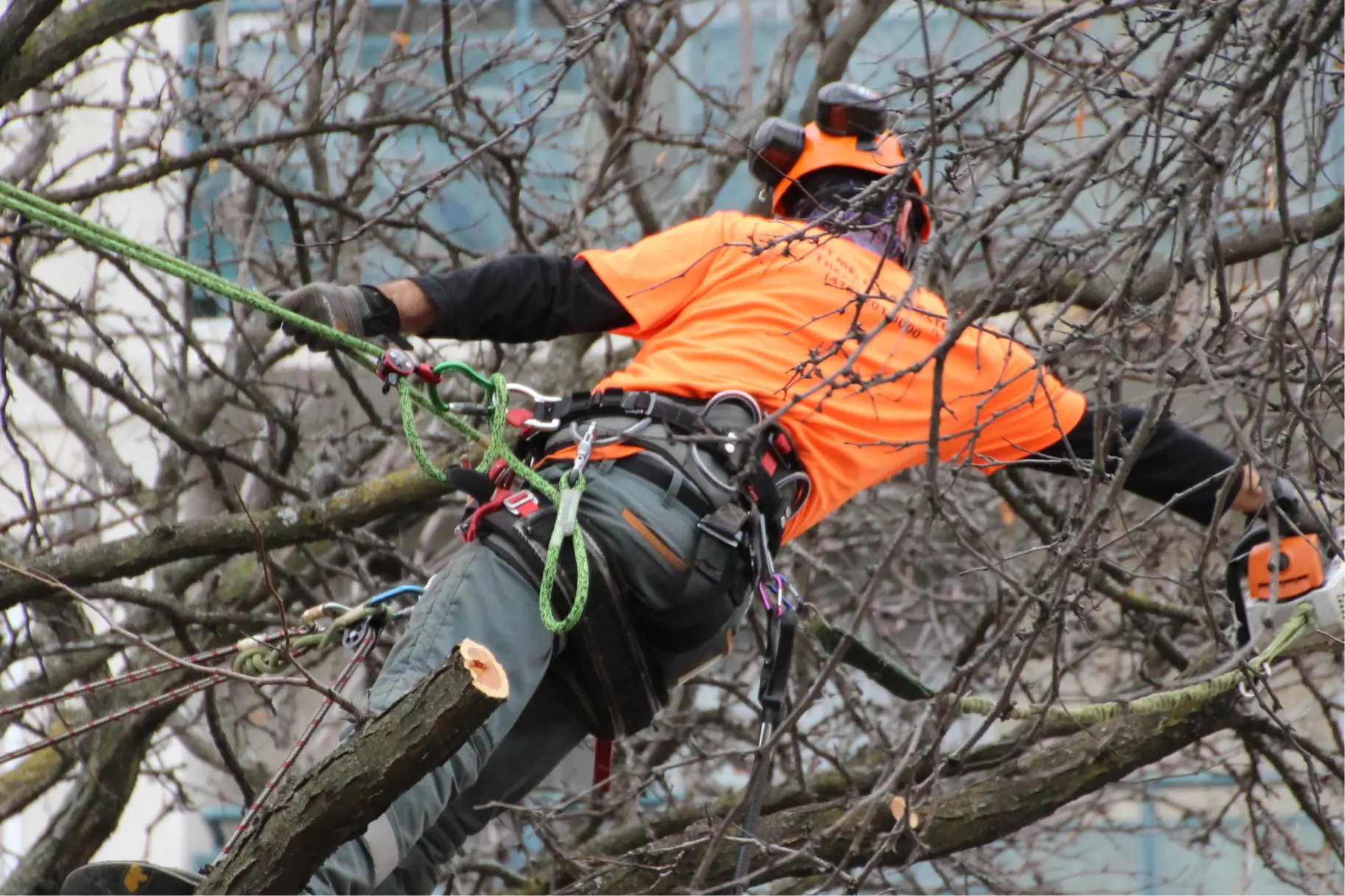
An International Society of Arboriculture (ISA) certified arborist can assess whether the tree is diseased, structurally compromised, or poses an imminent hazard. Their written report creates a professional paper trail that:
- Supports your case if you need to approach your neighbour formally
- Provides evidence for an insurance claim
- Is required documentation if you contact the City of Toronto
- Helps determine whether a permit is needed under Toronto's Private Tree Bylaw
Step 4 — Contact 311 if the Tree Is on City Property or an Imminent Hazard
If the problem tree is on a City boulevard or road allowance, call 311. The City of Toronto is responsible for maintaining trees on public land and can issue compliance orders.
If a private neighbour's tree is an imminent hazard (imminently at risk of falling), you can also call 311 to request an inspection. Note: the City's standard response time for imminent hazard reports is up to three business days. In a severe storm, response times may be longer.
Important: Toronto does not require a permit to remove a tree that poses an imminent hazard, even if it is protected under the Private Tree Bylaw—but photos must be taken and 311 should be notified to document the removal.
Step 5 — Consider Mediation Before Legal Action
If your neighbour refuses to cooperate and the risk is ongoing, community mediation services offer a lower-cost, faster alternative to court. A neutral mediator helps both parties reach an agreement. This step can preserve the neighbourly relationship and avoid the cost of litigation.
Step 6 — Consult a Property Lawyer
If mediation fails and damage has already occurred (or is ongoing), consult a lawyer who specializes in Ontario property law. You may have grounds to seek compensation for damages, and a lawyer can advise on your specific situation under both provincial and municipal regulations.
Can You Trim a Neighbour's Branches Yourself?
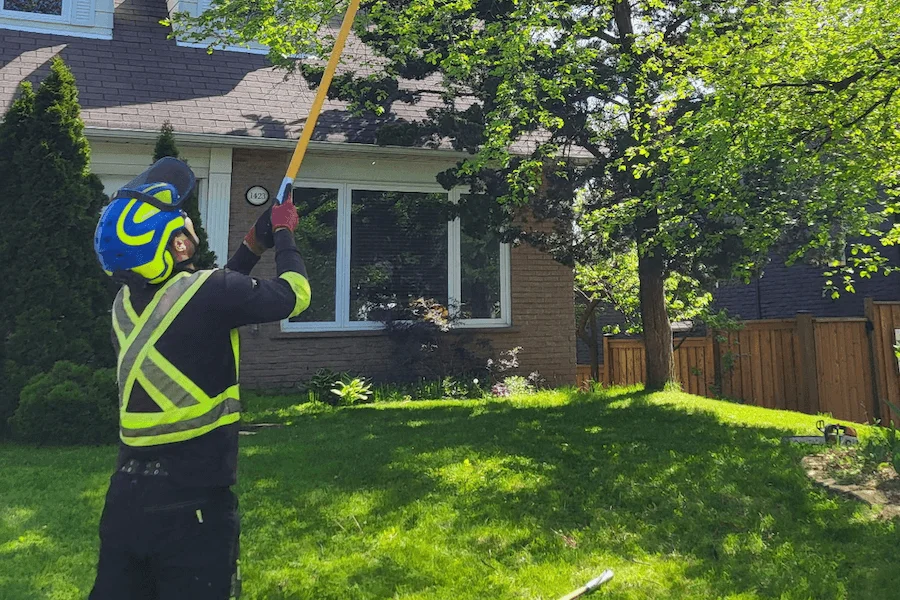
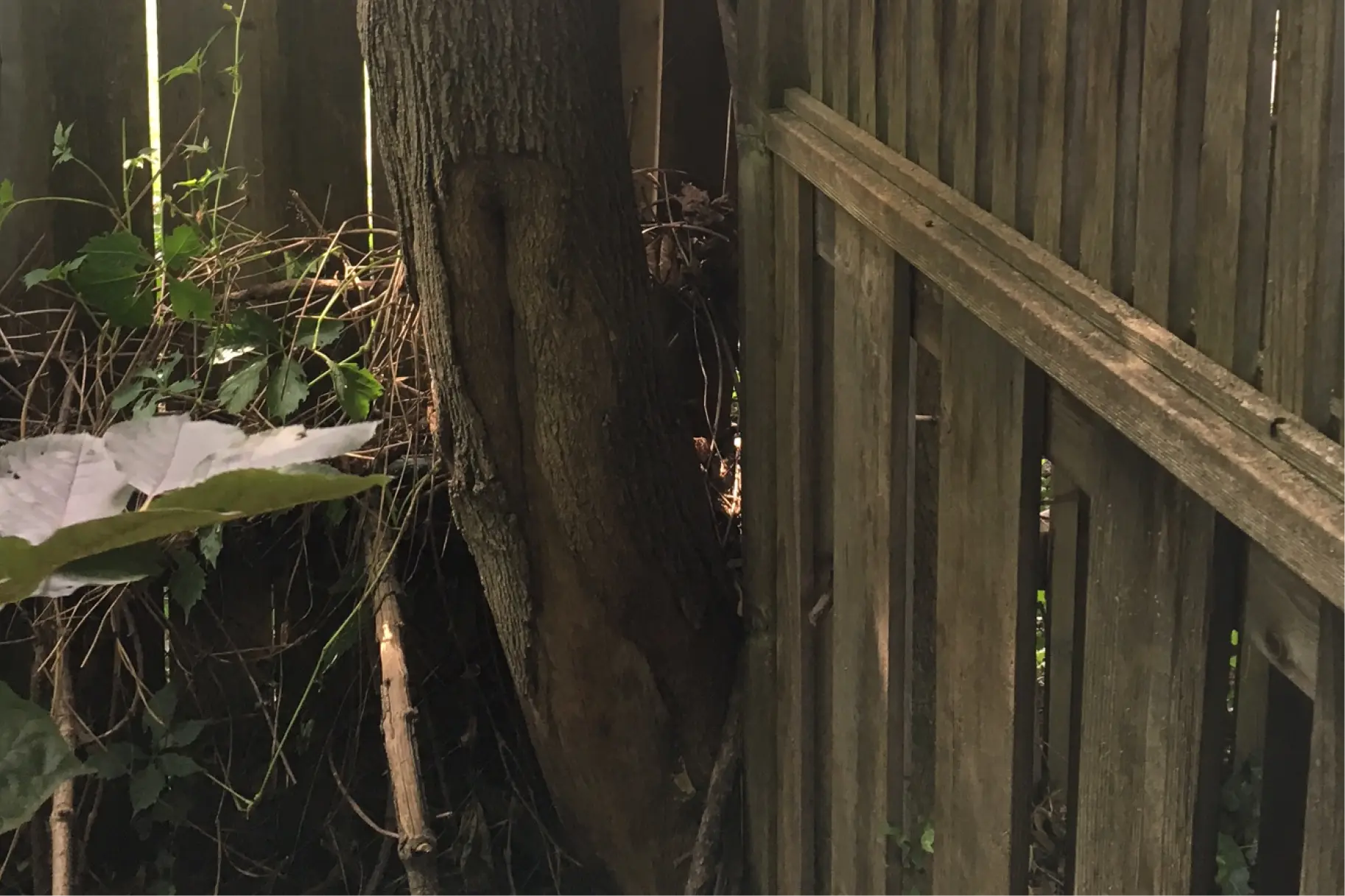
Yes, with important conditions. Under Ontario's self-help rule, you can prune branches and roots that extend onto your side of the property line—without needing your neighbour's permission. However:
- You may only prune up to the property line
- You must not damage or kill the tree
- You cannot remove more than roughly 25% of the tree's canopy at once
- You cannot trespass onto your neighbour's property to do the work
- If the tree is protected under Toronto's Private Tree Bylaw, large pruning jobs may require a permit
Always hire a certified arborist for significant pruning. Improper cuts can kill a protected tree—making you liable for its full replacement value.
Can a Neighbour Cut Down My Tree Without Permission?
Generally, no. In Toronto, your neighbour cannot remove or significantly prune your tree without your written consent. If they do so without permission, they could face:
- Fines under Toronto's Private Tree Bylaw (potentially significant depending on tree size)
- Civil liability for the tree's replacement value
The only exception is if there is an imminent danger and there is no time to notify you. Even then, the proper approach is to contact 311 and document the hazard before taking action.
What If a Neighbour's Tree Falls on My Property?
If a tree falls and causes damage, follow these steps immediately:
- Ensure everyone's safety first. If the tree has hit utility lines, call 911 or Toronto Hydro immediately.
- Document all damage with photos and video before any cleanup.
- Call your home insurance provider. Most standard Ontario home insurance policies cover damage from fallen trees, including a neighbour's tree.
- Contact a certified arborist to assess the remaining tree structure.
- Notify your neighbour and keep records of all communications.
If the tree was healthy and fell in a storm, you will typically rely on your own home insurance to cover repair costs. If the tree was diseased or neglected, your insurer may pursue your neighbour's insurer for compensation—a process called subrogation.
Why Winter Is a Critical Time for Tree Risk in Toronto
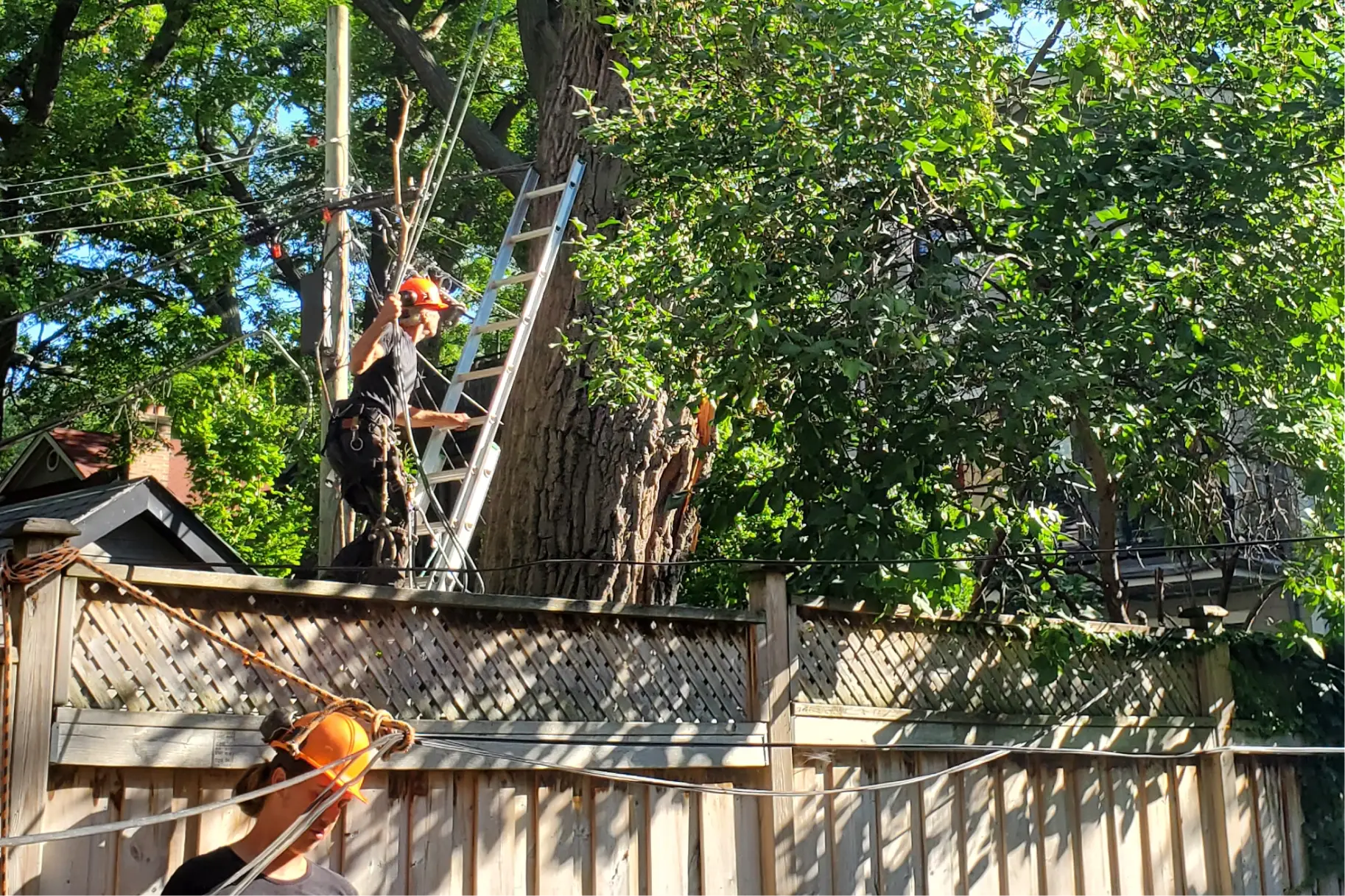
Toronto winters put enormous stress on trees. Ice storms, heavy snow loads, and freeze-thaw cycles can compromise branches and root systems that seemed stable in summer. Dormant-season pruning (late fall through early spring) is recommended by arborists because:
- The tree's structure is fully visible without foliage
- Cuts heal more cleanly with less risk of disease or pest entry
- Weakened branches can be identified before the weight of snow causes them to fail
If you have concerns about a neighbour's tree before winter sets in, raising the issue in fall gives the most time to address it properly—before a storm turns a preventable risk into an emergency.
Frequently Asked Questions
Who pays if a neighbour's tree falls on my fence?
If the tree fell due to natural causes and showed no signs of disease, your home insurance typically covers the fence repair. If the tree was visibly dead or diseased and your neighbour ignored warnings, they may be liable. Always document the tree's condition before and after.
Can I force my neighbour to remove a dangerous tree in Toronto?
You cannot legally force them directly, but you can contact 311 to request a City inspection. If the inspector deems the tree a hazard, the City can issue a compliance order requiring the owner to prune or remove it. If they fail to comply, the City may carry out the work and bill the property owner.
Do I need a permit to prune an overhanging branch in Toronto?
Pruning branches that hang over your side of the property line generally does not require a permit. However, if the tree has a trunk diameter of 30 cm or more, or if it's in a ravine protection area, consult Toronto Urban Forestry or a certified arborist before doing any significant work.
What is the Toronto 311 tree complaint process?
Call or go online to 311. Describe the tree's location, the specific hazard, and whether it's on private or public land. For imminent hazards, the standard City response time is up to three business days. You can also attach photos to your complaint.
The Bottom Line
Dealing with a neighbour's problematic tree in Toronto requires a clear understanding of your rights, good documentation habits, and—in most cases—a willingness to communicate directly with your neighbour before escalating. The most effective approach is almost always: document early, talk first, get an arborist involved, and escalate only if needed.
Tree Doctors is an ISA-certified arborist company serving Toronto and the Greater Toronto Area. If you need a professional assessment of a neighbour's tree or advice on your rights under Toronto's tree bylaws, contact us for a consultation.